
Free Shipping
Direct to your property
2-Year Warranty
Comprehensive coverage
30 Days Return
Hassle-free guarantee
24/7 Support
+1 (818) 617-6999
-
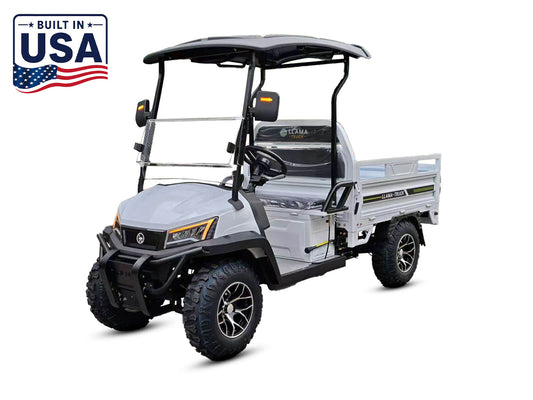
LLAMA Truck Apex – Heavy-Duty Electric Side-by-Side UTV With Hydraulic Dump Bed
Heavy-Duty Electric Side-by-Side UTV With Hydraulic Power Dump BedPayload: 2200 lbsRange: 62 MilesHeavy-Duty Work PlatformSave $2,000 (16%)Regular price $10,499Sale price $10,499 Regular price$12,499 -
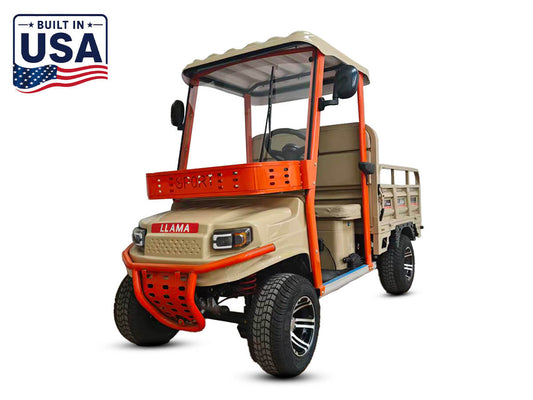
LLAMA Truck Ranger – Long-Range Electric Farm Side-by-Side & Utility Vehicle
Long-Range Electric Farm Side-by-Side UTV With Drop-Side Cargo BedPayload: 2200 lbsRange: Up to 100 MilesLong-Range Property WorkRegular price $10,499Sale price $10,499 Regular price$10,499 -
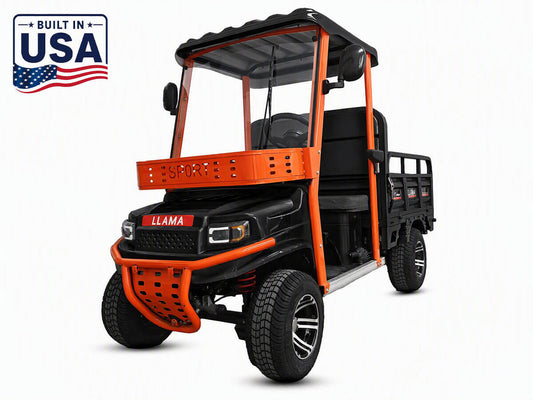
LLAMA Truck Ranger – Long-Range Electric Farm Side-by-Side & Utility Vehicle Black
Long-Range Electric Farm Side-by-Side UTV With Drop-Side Cargo BedPayload: 2200 lbsRange: Up to 100 MilesLong-Range Property WorkSave $1,500 (14%)Regular price $8,999Sale price $8,999 Regular price$10,499 -
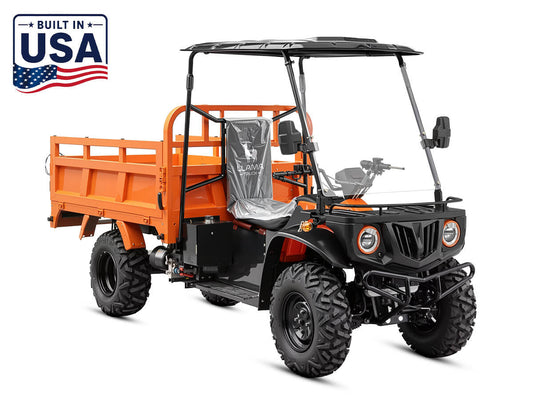
LLAMA Truck Atlas – Shaft-Drive All-Terrain Electric ATV & Utility Dump Truck
Shaft-Drive All-Terrain Electric ATV With Hydraulic Power Dump BedPayload: 2,200 lbs TowingRange: Up to 84 Miles4000W Shaft-DriveSave $15,000 (50%)Regular price $13,999.00 – $14,999.00Sale price $13,999.00 – $14,999.00 Regular price$28,999
Compare LLAMA 4-Wheel Electric Utility Vehicles
Compare the 4-wheel lineup by workload, payload, range, cargo configuration and operating environment. Use the model-specific specifications below to identify which vehicle best fits the distance, terrain and type of work on your property or job site.
| Model | Best For | Motor / Drive | Stated Range | Load / Towing | Key Difference |
|---|---|---|---|---|---|
| Apex | Heavy-Duty Hauling & Farm Work | Electric Work Platform | Up to 62 Miles | Heavy-Duty Payload | Heavy-duty chassis with dump bed configuration |
| Ranger | Long-Distance Property & Estate Work | All-Terrain Electric UTV | Up to 100 Miles* | All-Terrain Payload | Long-range battery focus for large acreage |
| Atlas | Rugged Adventure & Industrial Utility | 4000W High-Torque (Shaft Drive) | Up to 84 Miles | 2,200 lbs Max Towing | Automotive shaft-drive, 70N·m instant torque, 30°+ climb |
* Range and towing capacity depend on battery option, payload, terrain, speed and driving conditions. Always verify model specifications on individual product pages.
When Is a 4-Wheel Electric Utility Vehicle the Better Choice?
A 4-wheel electric utility vehicle can be a better fit when your work involves varied terrain, longer routes or situations where a wider four-wheel footprint is preferred. It can also be a practical choice for operators who need an all-purpose work vehicle rather than a compact cargo-focused trike.
| Operating Requirement | Why 4-Wheel Fits | Recommended Focus | What to Verify |
|---|---|---|---|
| Varied terrain | Broader four-wheel footprint and work-oriented chassis | All-Terrain | Tires, suspension, ground clearance, grade limits |
| Longer routes | Range-focused models can fit large properties & campuses | Long-Range | Battery capacity, real route distance, reserve range |
| All-purpose work | Broader utility use beyond compact cargo tasks | Utility UTV | Rated payload, cargo bed dimensions, accessories |
| Stability priority | Four-wheel layout provides a wider stability margin | Work Platform | Speed, slope grade, load distribution, surface conditions |
3-Wheel vs 4-Wheel Utility Vehicles: Which Layout Fits Your Work?
Understanding the functional trade-offs between 3-wheel and 4-wheel utility layouts helps ensure you choose the best machine for your property layout and daily operations.
| Operating Factor | When 3-Wheel is Better Suited | When 4-Wheel is Better Suited |
|---|---|---|
| Maneuverability | Compact routes, tighter work areas, narrow barn aisles | Broader routes where turning space is less constrained |
| Terrain Suitability | Firm, appropriate work surfaces and controlled routes | Rougher or more varied terrain, depending on model |
| Stability Needs | Lower-speed work where compactness is a priority | Greater stability margin and broader off-road use |
| Cargo Use | Cargo-oriented short-distance tasks & nimble dumps | All-purpose utility work and broader chassis options |
| Selection Rule | Choose by actual route, speed and load constraints | Choose by terrain roughness, stability and workload |
Where 4-Wheel Electric Utility Vehicles Fit Best
From large-acreage agriculture to facility groundskeeping, LLAMA 4-wheelers provide all-purpose utility.
 Agriculture
Farm & Ranch
Support hauling, fencing, feed, tools and general property work across appropriate farm routes. Choose the model according to payload, terrain, grade and work distance.
 Estate
Large Property & Estate
Use a 4-wheel electric UTV for maintenance, landscaping, supply movement and longer routes across large residential or commercial properties.
 Grounds
Grounds Maintenance
Support groundskeeping, tools, materials and routine maintenance across parks, large facilities and managed outdoor properties (including golf course turf maintenance).
 Commercial
Commercial Facilities
Move equipment and supplies around campuses, resorts, warehouses and commercial sites on permitted work routes.
 Campus
Campuses & Resorts
Quiet electric operation can be useful for internal maintenance and transport where route length, terrain and access conditions match the vehicle.
Why Choose Electric for Utility Work?
Switching to battery-electric utility vehicles brings distinct operational advantages to farms, estates, and facilities.
Quiet Operation
Electric drive significantly reduces motor noise during routine property, livestock, and facility maintenance tasks.
Zero Tailpipe Emissions
Battery-electric operation produces zero direct exhaust emissions while operating indoors, in barns, or around crops.
Simplified Service Needs
Eliminate routine oil, filter, and spark plug replacements while maintaining standard tires, brakes, and electrical care.
Work-Site Charging
Conveniently recharge overnight or between scheduled work shifts using standard AC power outlets on your property.
FAQ
What is a 4-wheel electric utility vehicle?
When should I choose a 4-wheel electric UTV instead of a 3-wheel utility truck?
Which LLAMA 4-wheel model is best for farm and property work?
How much payload can LLAMA 4-wheel electric utility vehicles carry?
How far can a LLAMA 4-wheel electric UTV travel on a charge?
Can LLAMA 4-wheel utility vehicles handle rough or uneven terrain?
Are LLAMA 4-wheel electric utility vehicles street legal?
Explore Other Electric Utility Vehicles
Looking for all-purpose electric trucks, compact maneuverability, or dedicated dump beds? Explore our specialized utility lineups:
All Electric Utility Trucks
Explore the full LLAMA Truck commercial catalog, including compact trikes, heavy-duty dumpers, and 4-wheel UTVs.
View All Trucks →3-Wheel Utility Vehicles
Engineered for rougher terrain, steeper inclines, and operations requiring maximum wheelbase stability.
Explore 3-Wheelers →Dump Bed Utility Trucks
Compare electric vehicles equipped with manual, electric power, and hydraulic dumping beds for loose materials.
Explore Dump Trucks →Vehicle Comparison Tool
Compare payload capacities, motor wattage, battery range, and chassis dimensions across all models side-by-side.
Compare Specs →