
Free Shipping
Direct to your property
2-Year Warranty
Comprehensive coverage
30 Days Return
Hassle-free guarantee
24/7 Support
+1 (818) 617-6999
-
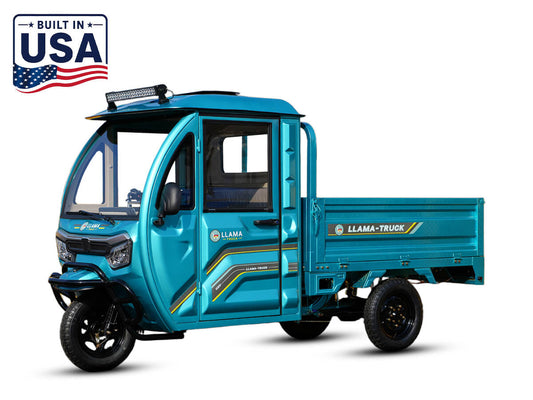
LLAMA Truck Meridian – Enclosed Cab Electric Utility Trike With AC & Heating
All-Weather Enclosed Cab Electric Utility Truck With AC & HeatingPayload: 2,000 lbsRange: Up to 50 MilesEnclosed CabSave $500 (8%)Regular price $5,499.00 – $6,499.00Sale price $5,499.00 – $6,499.00 Regular price$5,999
Engineered for Operator Protection & All-Season Utility
Explore the structural, visibility, and climate-control features that keep operators productive across changing outdoor conditions.
Full Enclosure & Automotive Safety Glass
Built with a reinforced steel cage, full-coverage side doors, and tempered windshield glass with an integrated wiper to shield operators from wind, driving rain, and flying job-site debris.
Cabin Ventilation & Heated Defrost
Multi-speed ventilation fans and electric forced-air heating circulate fresh air, prevent windshield condensation, and maintain clear operator sightlines in chilly or damp morning operations.
Available Climate Control (A/C)
For high-heat summer operations, available electric air-conditioning configurations provide powerful cabin cooling to reduce operator fatigue across extended farm, ranch, or facility shifts.
Enclosed Cab + Heavy-Duty Cargo Bed
Combines all-weather cabin comfort with versatile rear utility—supporting manual or powered dumping cargo beds to move soil, feed, tools, and materials without compromising haul capacity.
Which Cab Configuration Fits Your Work Environment?
Compare operating climates, shift durations, and cargo unloading needs to identify the right enclosed vehicle configuration for your property or commercial facility.
| Operating Environment | Key Job Need | Recommended Cab Setup | Configuration Focus |
|---|---|---|---|
| Mild / Variable Weather | Wind, light rain & flying debris protection | Base Enclosed Cab | Steel cage, sealed doors, safety windshield & wiper |
| Cold Mornings & Wet Climates | Windshield defogging & supplemental driver heat | Heated Cab + Ventilation | Forced-air electric defroster & multi-speed fan |
| Hot & Humid Summer Shifts | Active cooling to prevent operator fatigue | Climate-Controlled (A/C) | Electric A/C compressor system & high-output cooling |
| All-Weather Bulk Hauling | Full operator protection + effortless unloading | Cab + Power Dump Bed | Enclosed cabin paired with electric/hydraulic hoist bed |
Open vs Enclosed Utility Vehicles
Consider the trade-offs in operator exposure, vehicle weight, climate control and shift duration before selecting a cab configuration.
| Operating Factor | Open Utility Vehicle | Enclosed Utility Vehicle |
|---|---|---|
| Weather exposure | Higher exposure to wind, rain and cold | Reduced by physical enclosure & doors |
| Entry / exit | Simpler for frequent, short hops | Doors add physical structure & latching |
| Climate control | Ambient outside conditions | Heating, ventilation or AC may be available |
| Vehicle weight | Typically lower curb weight | Higher curb weight due to cab & glass |
| Best fit | Mild weather & frequent stop-and-go | Longer shifts, harsh weather & climate needs |
Where Enclosed Electric Utility Vehicles Make Sense
Tailored for operations where operator comfort and weather protection directly impact productivity.
 All-Day Work
Long Outdoor Shifts
Farm, ranch or property routes where operators spend extended hours exposed to wind, rain or cold.
 Groundskeeping
Grounds & Facility Operations
Campus, resort, commercial property and grounds-maintenance work with repeated outdoor travel.
 Logistics
Weather-Exposed Logistics
Internal delivery or site logistics where operators move frequently between indoor and outdoor areas.
Winter / ClimateCold or Variable Climate Work
Operations where heating, ventilation or available climate control maintain operator focus.
FAQ
What is an enclosed electric utility vehicle?
When is an enclosed cab worth choosing over an open utility vehicle?
What cab features should I compare?
How do heating and air conditioning affect electric vehicle range?
Does an enclosed cab affect payload or vehicle weight?
Which work environments are enclosed electric utility vehicles best suited for?
Explore Other Electric Utility Vehicles
Looking for all-purpose electric trucks, 4-wheel stability, or dedicated dump beds? Explore our specialized utility lineups:
All Electric Utility Trucks
Explore the full LLAMA Truck commercial catalog, including compact trikes, heavy-duty dumpers, and 4-wheel UTVs.
View All Trucks →4-Wheel Utility Vehicles
Engineered for rougher terrain, steeper inclines, and operations requiring maximum wheelbase stability.
Explore 4-Wheelers →3-Wheel Electric Utility Trucks
Ideal for tight barn aisles, narrow pathways, and frequent stop-and-go tasks where compact turning and nimble handling are essential.
Explore 3-Wheelers →Vehicle Comparison Tool
Compare payload capacities, motor wattage, battery range, and chassis dimensions across all models side-by-side.
Compare Specs →