
Free Shipping
Direct to your property
2-Year Warranty
Comprehensive coverage
30 Days Return
Hassle-free guarantee
24/7 Support
+1 (818) 617-6999
-
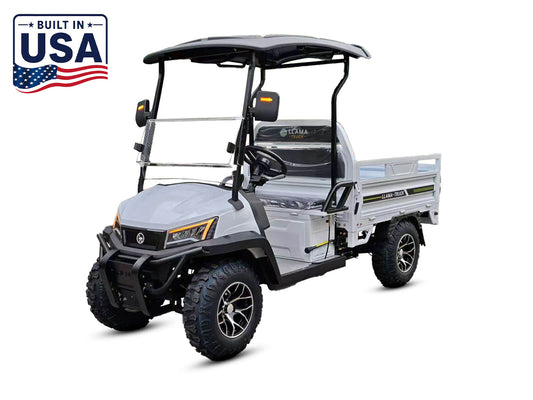
LLAMA Truck Apex – Heavy-Duty Electric Side-by-Side UTV With Hydraulic Dump Bed
Heavy-Duty Electric Side-by-Side UTV With Hydraulic Power Dump BedPayload: 2200 lbsRange: 62 MilesHeavy-Duty Work PlatformSave $2,000 (16%)Regular price $10,499Sale price $10,499 Regular price$12,499 -
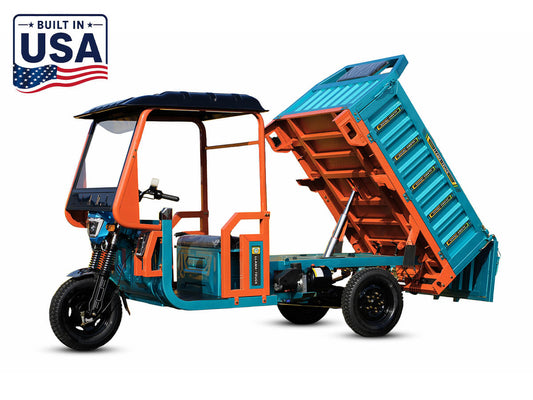
LLAMA Truck Blaze – Off-Road Electric Cargo Trike With Dump Bed
All-Terrain Farm Electric Cargo Trike With Power or Manual Dump BedPayload: 1,500–2,000 lbsRange: Up to 50 MilesPower / Manual DumpSave $1,000 (18%)Regular price $3,799.00 – $4,599.00Sale price $3,799.00 – $4,599.00 Regular price$4,799 -
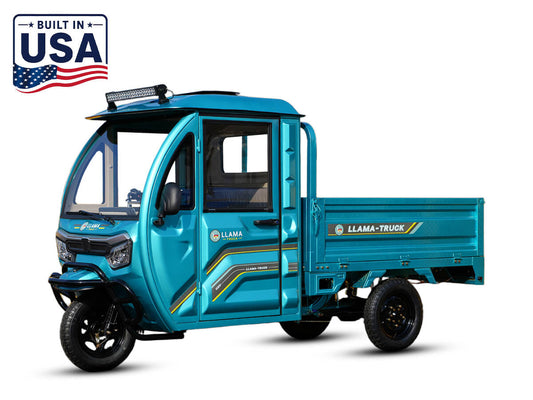
LLAMA Truck Meridian – Enclosed Cab Electric Utility Trike With AC & Heating
All-Weather Enclosed Cab Electric Utility Truck With AC & HeatingPayload: 2,000 lbsRange: Up to 50 MilesEnclosed CabSave $500 (8%)Regular price $5,499.00 – $6,499.00Sale price $5,499.00 – $6,499.00 Regular price$5,999 -
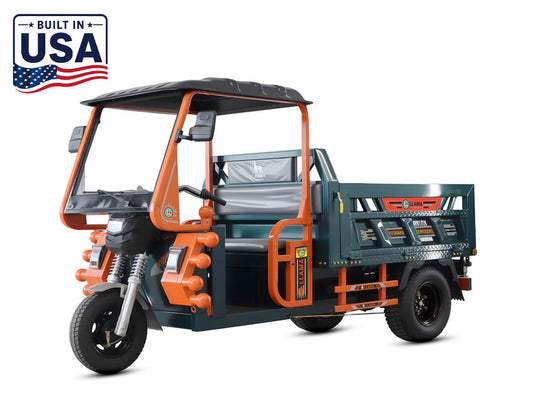
LLAMA Truck Thunder – Heavy-Duty Electric Dump Truck & Cargo Trike
Max-Capacity Heavy-Duty Electric Dump Truck With Dual-Hydraulic LiftPayload: 4,000 lbsRange: Up to 50 MilesHydraulic DumpSave $1,000 (15%)Regular price $5,799.00 – $6,499.00Sale price $5,799.00 – $6,499.00 Regular price$6,499 -
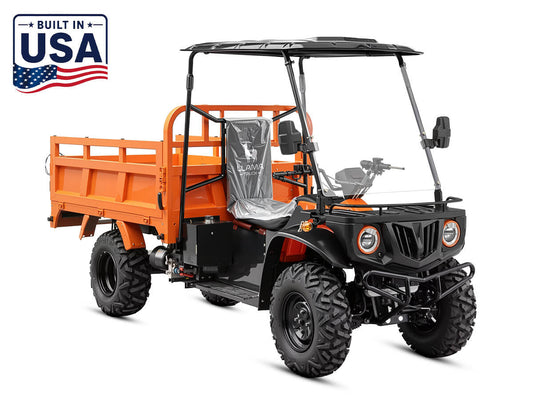
LLAMA Truck Atlas – Shaft-Drive All-Terrain Electric ATV & Utility Dump Truck
Shaft-Drive All-Terrain Electric ATV With Hydraulic Power Dump BedPayload: 2,200 lbs TowingRange: Up to 84 Miles4000W Shaft-DriveSave $15,000 (50%)Regular price $13,999.00 – $14,999.00Sale price $13,999.00 – $14,999.00 Regular price$28,999
Choose by Dump Operation
Select the dumping mechanism that matches your unloading frequency and workload.
Manual Dump
A non-powered dump-bed configuration. The operator raises or tilts the bed manually, so selection should focus on the model’s rated payload, bed size, bed-release method and how often unloading is required.
Power Dump
A powered dump-bed configuration that raises the bed using a powered lifting system. On some LLAMA models or variants, the Power Dump mechanism uses a hydraulic lift. Compare the exact mechanism, payload, bed size, operating limits and battery configuration for the selected model.
Compare LLAMA Dump-Bed Utility Vehicles
Compare wheel layout, rated payload, dump-bed type, bed size and driving range to find the right vehicle for your workload. Use the individual product specifications to confirm the exact configuration before purchase.
| Model | Wheel Layout | Dump Operation | Range | Payload / Load | Best For |
|---|---|---|---|---|---|
| Blaze | 3-Wheel | Manual / Power Dump | Up to 50 Miles | 1,500–2,000 lbs | Compact cargo & routine hauling |
| Thunder | 3-Wheel | Power Dump | Up to 50 Miles | 4,000 lbs | Heavy bulk unloading |
| Meridian | 3-Wheel | Manual / Power by Variant | Up to 50 Miles | 2,000 lbs | All-weather cabin & dump work |
| Apex | 4-Wheel | Power Dump Bed | Up to 50 Miles | 2,200 lbs | 4-wheel stability & power dumping |
| Atlas | 4-Wheel | Power Dump Bed | Up to 84 Miles | 2,200 lbs Towing | Long-range 4000W platform |
* Range and towing capacity depend on battery option, payload, terrain, speed and driving conditions. Always verify model specifications on individual product pages.
Which Dump-Bed Vehicle Fits Your Work?
Choose the dump-bed vehicle around the material, unloading frequency, route and load—not the lifting mechanism alone.
| Work Need | Prioritize | Recommended Direction | What to Verify |
|---|---|---|---|
| Light / routine hauling | Bed size, maneuverability, simple dump operation | Compact manual/power dump model | Bed dimensions, payload limits |
| Frequent bulk materials | Power Dump, payload, unloading frequency, power-lift mechanism | Power Dump models | Battery capacity, dump cycles |
| Heavy commercial loads | Rated payload, chassis, braking, load distribution | Heavy-duty model | Braking system, chassis rating |
| Rougher property terrain | Wheel layout, tires, suspension, ground clearance | 4-wheel dump-bed models | Terrain capability, grade limits |
| All-weather work | Cab protection + dump function | Enclosed cab configuration | Door clearance, cab sealing |
What Can You Haul in a Dump-Bed Utility Vehicle?
Engineered for moving, transporting, and dumping materials across properties and job sites.
 Landscaping
Soil & Mulch
Useful for landscaping and property work when the total load stays within the model’s rated payload and bed limits.
 Farm & Ranch
Feed & Farm Supplies
Move feed, fencing supplies, tools and other farm materials across appropriate work routes.
 Property
Firewood & Yard Debris
Carry firewood, branches and property-maintenance debris while keeping the load stable and below the rated limit.
 Heavy Haul
Gravel & Dense Materials
Dense materials can reach payload limits quickly. Use smaller loads and confirm bed and payload ratings before transport.
 Job-Site Support
Tools & Job-Site Materials
Support controlled job-site movement of tools, debris or materials (not intended as a full-size construction dump truck).
3-Wheel vs 4-Wheel Dump-Bed Vehicles
Understanding the functional trade-offs between 3-wheel and 4-wheel utility layouts helps ensure you choose the best machine for your property layout and daily operations.
| Operating Factor | When 3-Wheel is Better Suited | When 4-Wheel is Better Suited |
|---|---|---|
| Maneuverability | Compact routes, tighter work areas, narrow barn aisles | Broader routes where turning space is less constrained |
| Terrain Suitability | Firm, appropriate work surfaces and controlled routes | Rougher or more varied terrain, depending on model |
| Stability Needs | Lower-speed work where compactness is a priority | Greater stability margin and broader off-road use |
| Cargo Use | Cargo-oriented short-distance tasks & nimble dumps | All-purpose utility work and broader chassis options |
| Selection Rule | Choose by actual route, speed and load constraints | Choose by terrain roughness, stability and workload |
Safe Dump-Bed Operation
Dumping should generally be performed with the vehicle stationary on firm, level ground whenever possible. Keep the load within the model’s rated payload and bed limits, distribute material evenly, and keep people clear of the bed, tailgate and lifting mechanism. Raising a loaded bed changes the vehicle’s center of gravity, so slopes, soft ground, uneven loading or unstable surfaces can increase rollover or load-shift risk. Follow the model-specific operating instructions and safety warnings before using the dump system.
FAQ
What is an electric utility vehicle with a dump bed?
What is the difference between Manual Dump and Power Dump beds?
Which LLAMA dump-bed model is best for heavy loads?
What materials can I carry in a LLAMA dump-bed utility vehicle?
How much payload can a dump-bed LLAMA Truck carry?
Can I operate the dump bed on uneven ground?
Does using a Power Dump system affect driving range?
Explore Other Electric Utility Vehicles
Looking for all-purpose electric trucks, 4-wheel stability, or dedicated dump beds? Explore our specialized utility lineups:
All Electric Utility Trucks
Explore the full LLAMA Truck commercial catalog, including compact trikes, heavy-duty dumpers, and 4-wheel UTVs.
View All Trucks →4-Wheel Utility Vehicles
Engineered for rougher terrain, steeper inclines, and operations requiring maximum wheelbase stability.
Explore 4-Wheelers →3-Wheel Utility Vehicles
Engineered for rougher terrain, steeper inclines, and operations requiring maximum wheelbase stability.
Explore 3-Wheelers →Vehicle Comparison Tool
Compare payload capacities, motor wattage, battery range, and chassis dimensions across all models side-by-side.
Compare Specs →