
3-Wheel Electric Utility Trucks & Cargo Trikes
LLAMA 3-wheel electric utility trucks combine compact maneuverability with practical cargo capacity for farms, large properties, commercial facilities and material-handling jobs. Explore electric cargo trikes with dump beds, enclosed cabins and specialized lift configurations for different workloads. Compare models by payload, range, cargo system and work application to choose the right 3-wheel vehicle for your daily tasks.

Free Shipping
Direct to your property
2-Year Warranty
Comprehensive coverage
30 Days Return
Hassle-free guarantee
24/7 Support
+1 (818) 617-6999
-
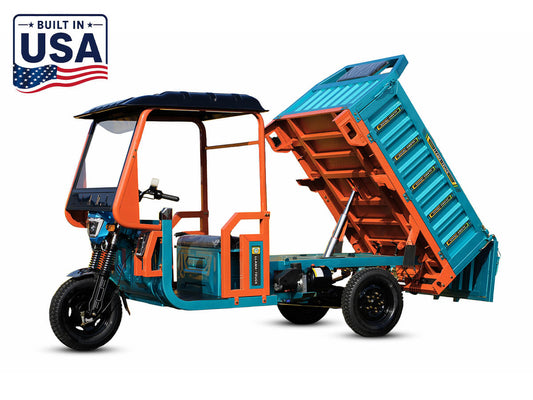
LLAMA Truck Blaze (Built in USA)
Electric Cargo Trike With Dump BedPayload: 1,500–2,000 lbsRange: Up to 50 MilesPower / Manual DumpRegular price $4,799.00 – $5,599.00Sale price $4,799.00 – $5,599.00 Regular price$4,799 -
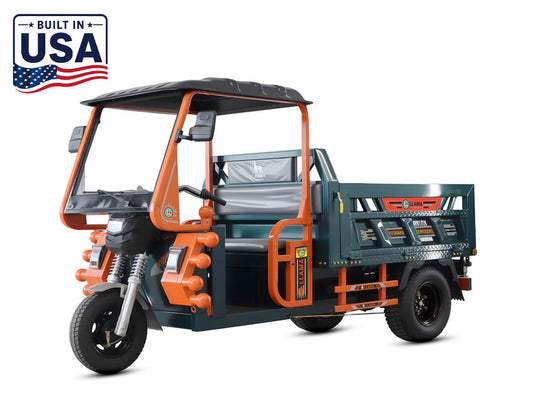
LLAMA Truck Thunder (Built in USA)
Heavy-Duty 3-Wheel Electric Utility TruckPayload: 4,000 lbsRange: Up to 50 MilesHydraulic DumpRegular price $6,499.00 – $6,799.00Sale price $6,499.00 – $6,799.00 Regular price$6,499 -
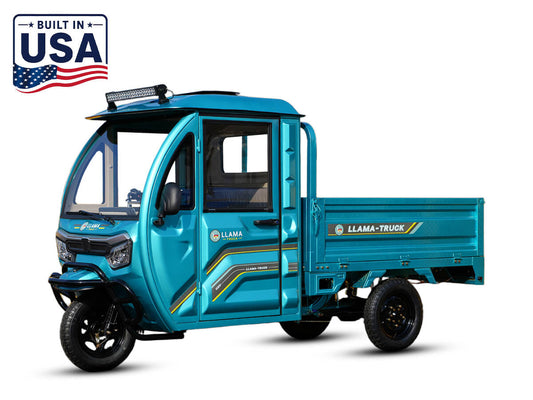
LLAMA Truck Meridian (Built in USA)
Enclosed Electric Utility TrikePayload: 2,000 lbsRange: Up to 50 MilesEnclosed CabRegular price $5,999.00 – $6,999.00Sale price $5,999.00 – $6,999.00 Regular price$5,999 -
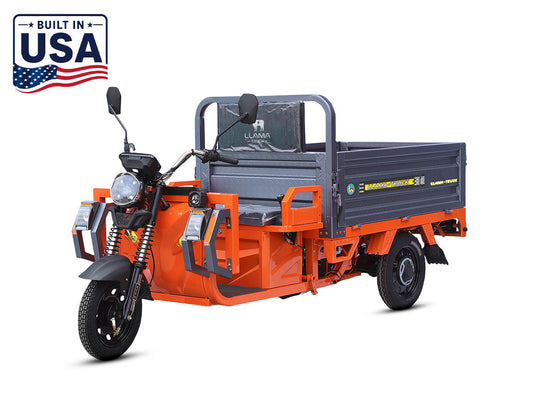
LLAMA Truck Crest (Built in USA)
Compact 3-Wheel Electric Utility TruckPayload: 1,100 lbsRange: 32–40 MilesManual DumpRegular price $4,399Sale price $4,399 Regular price$4,399 -
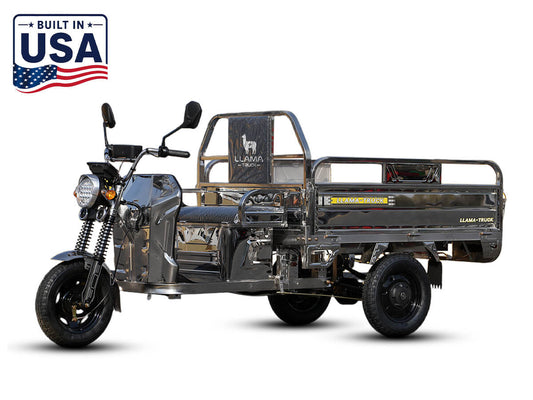
LLAMA Truck Platinum (Built in USA)
Stainless-Steel Electric Utility TricyclePayload: 1,100 lbsRange: 32–40 MilesStainless SteelRegular price $4,499Sale price $4,499 Regular price$4,499 -
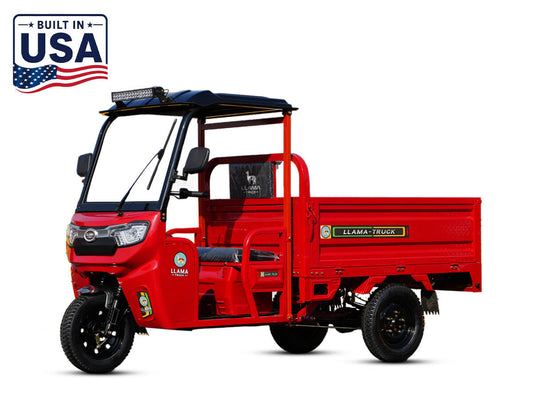
LLAMA Truck Vector (Built in USA)
Open-Chassis Electric Utility TrikePayload: 2,000 lbsRange: Up to 50 MilesManual DumpRegular price $5,799Sale price $5,799 Regular price$5,799 -
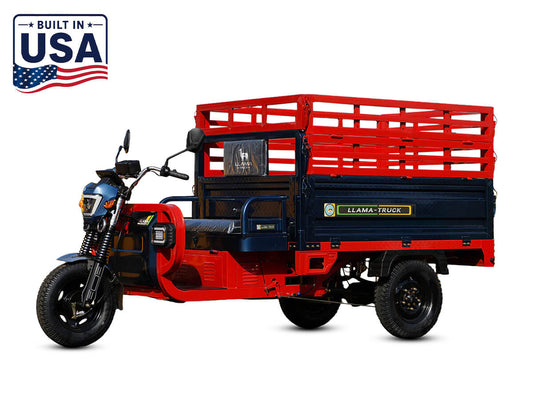
LLAMA Truck Titan
Heavy-Duty 3-Wheel Cargo TruckPayload: 2,000 lbsRange: Up to 50 MilesExtra Wide BedRegular price $5,799Sale price $5,799 Regular price$5,799 -
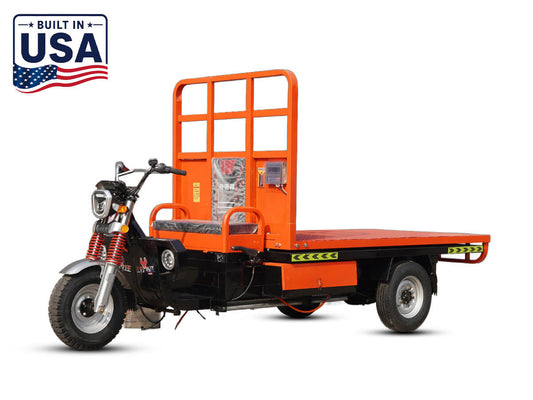
LLAMA Truck RiseX (Built in USA)
Electric Lift Tricycle With Hydraulic PlatformPayload: 4,000 lbsRange: Up to 50 MilesHydraulic Scissor LiftRegular price $9,499Sale price $9,499 Regular price$9,499
Choose a 3-Wheel Utility Vehicle by Work Configuration
Start with the cargo system, weather protection or specialized equipment that best matches the job.

Cargo & Hauling
Compact 3-wheel work vehicles for moving tools, feed, supplies, packages and other everyday cargo across farms, properties and commercial sites.
Explore Cargo Models →
Dump-Bed Models
Choose a dumping configuration for short-distance movement of soil, mulch, feed, gravel and debris within the vehicle’s rated payload and operating limits.
Explore Dump Trucks →
Enclosed-Cab Models
Add weather protection for delivery, property and facility work where operators spend more time exposed to rain, wind or cold.
Explore Cab Models →
Hydraulic Lift & Specialized Work
Choose specialized models such as RiseX when the job requires lifting or positioning materials rather than standard cargo hauling.
Explore Lift Trike →Which 3-Wheel LLAMA Truck Fits Your Work?
The right 3-wheel utility vehicle depends on the load, route, terrain and work configuration you need. Use the guide below to narrow the lineup by cargo requirements, weather protection and specialized equipment, then compare model specifications before purchase.
| Primary Need | Prioritize | Recommended Type | Example Models |
|---|---|---|---|
| Daily cargo hauling | Payload, cargo bed, turning footprint | Cargo & hauling | |
| Loose materials | Dump system, bed size, rated payload | Dump-bed models | |
| Weather protection | Cab enclosure, ventilation/heating if equipped | Enclosed cab | |
| Material lifting | Lift platform, work height, load rating | Specialized lift | |
| Heavy loads | Payload, braking, load distribution | Heavy-duty 3-wheel |
3-Wheel vs 4-Wheel Utility Vehicles: Which Layout Fits Your Work?
Understanding the functional trade-offs between 3-wheel and 4-wheel utility layouts helps ensure you choose the best machine for your property layout and daily operations.
| Operating Factor | When 3-Wheel is Better Suited | When 4-Wheel is Better Suited |
|---|---|---|
| Maneuverability | Compact routes, tighter work areas, narrow barn aisles | Broader routes where turning space is less constrained |
| Terrain Suitability | Firm, appropriate work surfaces and controlled routes | Rougher or more varied terrain, depending on model |
| Stability Needs | Lower-speed work where compactness is a priority | Greater stability margin and broader off-road use |
| Cargo Use | Cargo-oriented short-distance tasks & nimble dumps | All-purpose utility work and broader chassis options |
| Selection Rule | Choose by actual route, speed and load constraints | Choose by terrain roughness, stability and workload |
FAQ
What is a 3-wheel electric utility truck?
What jobs are 3-wheel electric trucks best suited for?
How is a 3-wheel utility truck different from a 4-wheel UTV?
How much weight can a LLAMA 3-wheel electric truck carry?
Which LLAMA 3-wheel models have dump beds?
How far can a 3-wheel LLAMA Truck travel on a charge?
Are 3-wheel electric utility trucks street legal?
Explore Other Electric Utility Vehicles
Looking for all-purpose electric trucks, 4-wheel stability, or dedicated dump beds? Explore our specialized utility lineups:
All Electric Utility Trucks
Explore the full LLAMA Truck commercial catalog, including compact trikes, heavy-duty dumpers, and 4-wheel UTVs.
View All Trucks →4-Wheel Utility Vehicles
Engineered for rougher terrain, steeper inclines, and operations requiring maximum wheelbase stability.
Explore 4-Wheelers →Dump Bed Utility Trucks
Compare electric vehicles equipped with manual, electric power, and hydraulic dumping beds for loose materials.
Explore Dump Trucks →Vehicle Comparison Tool
Compare payload capacities, motor wattage, battery range, and chassis dimensions across all models side-by-side.
Compare Specs →