
Free Shipping
Direct to your property
2-Year Warranty
Comprehensive coverage
30 Days Return
Hassle-free guarantee
24/7 Support
+1 (818) 617-6999
-
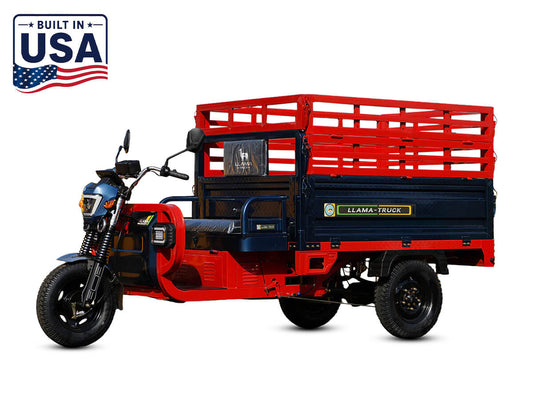
LLAMA Truck Titan – Wide-Bed High-Rail Electric Cargo Truck & Trike
Extra-Wide High-Rail Electric Cargo Truck for Bulky Commercial LoadsPayload: 2,000 lbsRange: Up to 50 MilesExtra Wide BedRegular price $5,799Sale price $5,799 Regular price$5,799 -
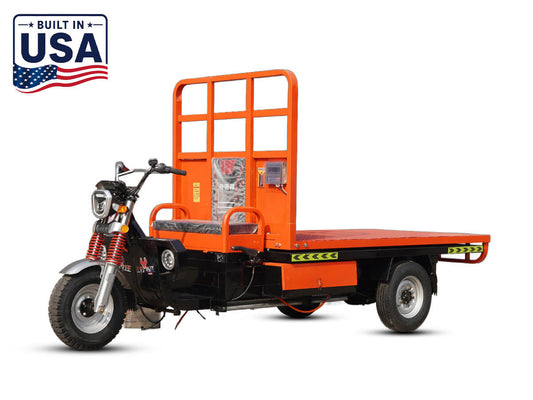
LLAMA Truck RiseX – Electric Scissor-Lift Platform Truck With Built-In Scale
Hydraulic Scissor-Lift Flatbed Utility Truck With Integrated ScalePayload: 4,000 lbsRange: Up to 50 MilesHydraulic Scissor LiftSave $3,000 (32%)Regular price $6,499Sale price $6,499 Regular price$9,499
Choose by Specialized Work Configuration
Select the purpose-built equipment or body structure that matches your facility or field operation.
Lift & Material Handling
Purpose-built vehicles with integrated scissor-lift or elevated platform systems for loading, positioning, and accessing elevated materials.
Oversized & High-Volume Cargo
Reinforced high-cage cargo bodies designed for bulky, tall, or irregular loads that cannot be secured safely in a standard cargo bed.
Service & Mobile Maintenance
Integrated mobile workstations with dedicated tool cabinetry, auxiliary power access, and service gear for commercial technicians.
Task-Specific Platforms
Custom chassis adaptations and specialized utility bodies engineered for resort operations, aerial access, agriculture, and logistics.
Compare Specialized Electric Utility Vehicles
Compare the task-specificfunctionfirst, then review work equipment, vehicle layout, payload, rangeand equipment-specific ratings. A specialized vehicle should be selected around the job it performs, notby motor power or payload alone.
| Model | Specialized Function | Work Equipment | Range | Rated Payload | Best For |
|---|---|---|---|---|---|
| RiseX | Lift & Material Handling | Hydraulic Scissor Lift Platform | Up to 50 Miles | 4,000 lbs (Verify Lift vs Payload) | Elevated loading & material positioning |
| Titan | Oversized / High-Volume Cargo | Reinforced High-Cage Cargo Body | Up to 50 Miles | 2,000 lbs | Bulky, tall & irregular cargo hauling |
* Range and towing capacity depend on battery option, payload, terrain, speed and driving conditions. Always verify model specifications on individual product pages.
Which Specialized Configuration Fits Your Work?
A specialized utility vehicle is configured around a specific work function rather than transportation alone. Higher motor power, payload or range by themselves do not make a vehicle specialized; the defining difference is task-specific equipment, body design or an integrated work system.
| Work Need | Prioritize | Recommended Direction | What to Verify |
|---|---|---|---|
| Lift or position materials | Lift height, platform rating, stability controls | Lift & Material Handling (RiseX) | Platform dimensions, lift cycle speed |
| Move bulky / irregular cargo | Cargo-body dimensions, high cage, tie-downs | High-Cage Cargo (Titan) | Cage height, gate access, load security |
| Maintenance & field service | Tool storage, power supply, service-body layout | Service & Maintenance Platform | Cabinet payload, auxiliary power draw |
| Elevated facility access | Platform capacity, working height, safety gates | Mobile Work Platform | Interlock controls, ground stability |
Purpose-Built Applications for Task-Specific Vehicles
Engineered for operations where standard cargo beds cannot meet the handling or structural requirements.
 Material Handling
Elevated Material Handling
Move, raise, and position heavy materials where an integrated scissor lift eliminates manual overhead straining.
 High-Volume Cargo
Bulky & Irregular Cargo
Carry tall, awkward, or high-volume items like crates, barrels, and fencing that require high-cage side containment.
 Warehouse
Warehouse & Logistics Support
Facilitate internal material movement, inventory transfer, and elevated racking access on permitted facility routes.
 Agriculture
Agricultural Handling
Transport produce crates, nursery stock, and specialized farm equipment across controlled routes with specialized bodies.
 Maintenance
Facility Maintenance & Repair
Support commercial facility technicians with mobile tool storage and elevated access systems across large campuses.
Safety & Operator Requirements
Specialized work equipment can introduce additional operating requirements beyond normal vehicle driving. Lift systems, elevated platforms, hydraulic equipment and unusual cargo bodies should be used only within their rated limits and according to the model-specific instructions. Operator training, employer procedures and site or regulatory requirements can vary by equipment and application. Confirm the relevant safety requirements before using specialized work systems.
FAQ
What is a specialized electric utility vehicle?
What types of specialized work equipment can these vehicles include?
How do I choose between a lift vehicle and a specialized cargo vehicle?
Do hydraulic or powered work systems affect battery range?
What operator training is required for specialized utility vehicles?
How should I compare payload, lifting capacity and work-equipment ratings?
Explore Other Electric Utility Vehicles
Looking for all-purpose electric trucks, 4-wheel stability, or dedicated dump beds? Explore our specialized utility lineups:
All Electric Utility Trucks
Explore the full LLAMA Truck commercial catalog, including compact trikes, heavy-duty dumpers, and 4-wheel UTVs.
View All Trucks →4-Wheel Utility Vehicles
Engineered for rougher terrain, steeper inclines, and operations requiring maximum wheelbase stability.
Explore 4-Wheelers →3-Wheel Utility Vehicles
Engineered for rougher terrain, steeper inclines, and operations requiring maximum wheelbase stability.
Explore 3-Wheelers →Vehicle Comparison Tool
Compare payload capacities, motor wattage, battery range, and chassis dimensions across all models side-by-side.
Compare Specs →